Candle Flame Too High or Too Small (Causes and Fixes)
A candle flame that is too high almost always means the wick is oversized, under trimmed, or fighting a draft. A flame that's barely there usually means the opposite problem: a wick too small for the job, or one that's drowning in fragrance oil before it ever gets a chance to burn clean. Both come back to the same root cause. The wick isn't matched to the wax, the vessel, and the fragrance load.
Good news: this is almost never a "toss the candle" problem. It's a quick trim, or a one-size adjustment on your next pour. Here's the cause and fix for each, plus how to keep it from happening again.
What a Correct Flame Actually Looks Like
Before troubleshooting, it helps to know the target. A properly wicked candle burns with a steady, teardrop-shaped flame around one to one and a half inches tall. It shouldn't dance, lean, or throw visible smoke, and it should hold that height for the entire burn, not just the first ten minutes. Line up three candles side by side, one with a too-large wick, one correctly sized, and one undersized, and the difference is obvious the second you light them. The tall one roars and smokes. The correct one sits calm and even. The small one gutters and struggles to stay lit at all. Every fix below is just closing the gap back to that middle candle.
Flame Too High: Causes and Fixes
A flame climbing past an inch and a half, throwing soot, or dancing around like it's got somewhere to be usually comes down to one of three things.
The wick is too large. A wick sized for a bigger vessel or a different wax pulls more fuel than the flame needs. More fuel, bigger flame, more heat than the glass was built to handle.
The wick hasn't been trimmed. Wax vapor and carbon build up on an untrimmed wick fast, and that extra material burns hot. Left long enough, it curls over and mushrooms, which is its own problem (more on that in our guide to wick mushrooming ) but the flame height issue shows up first.
Draft. A candle near an HVAC vent, a fan, or a doorway will flicker and stretch even with a correctly sized, freshly trimmed wick. Move it before you touch the wick.
A too-high flame usually means the wick is too large or untrimmed. Trim to a quarter inch and size the wick down if trimming alone doesn't bring it back in line. The National Candle Association recommends trimming the wick to ¼ inch before every burn to keep flame height in check and cut down on smoke.
The fix, in order: trim to ¼ inch with a proper wick trimmer, relight, and watch it for ten minutes. Still too tall? Move it out of any draft. Still too tall after that? You're one size too big. Drop down a size using the wick size chart and test again.
TFC's Size-Up, Size-Down Rule
Here's the shortcut our team uses on the studio floor before reaching for a whole new wick chart lookup. If the flame is too tall and a fresh ¼ inch trim doesn't fix it within one burn, size down. If the melt pool is staying shallow, taking longer than about three to four hours to reach the edge of a standard 3-inch vessel, or the flame looks like it's fighting for oxygen, size up. Everything else, drafts, fragrance load, dye saturation, gets checked before you touch the wick size at all. That's what test batches are for.
Flame Too Small: Causes and Fixes
A flame that's low, dim, or struggling to stay lit has the opposite problem.
The wick is too small. If it can't pull enough fuel to sustain a proper flame, it'll drown in its own melt pool before the wax anywhere near the edge of the jar gets warm. That's also a fast track to candle tunneling , where the candle burns a narrow well straight down the middle and leaves the rest of the wax untouched.
Too much fragrance or dye. Every wax has a maximum load it can carry, generally somewhere between 6% and 10% of wax weight depending on the wax type, and it's worth checking your supplier's data sheet for the exact number. Push past that ceiling and the fragrance oil or dye flake sits on the wick and chokes it. The flame can't burn clean, and it definitely can't do its job of vaporizing fragrance into the room.
A too-small flame usually means the wick is too small for the vessel or the wax is overloaded with fragrance or dye. Size up the wick and check your fragrance load against the wax's recommended maximum.
The fix: confirm your fragrance load is within spec, then size up using the same wick size chart . If your flame has been small for a while, check for tunneling before you relight. And if your candle's been burning fine but the scent still isn't filling the room, the flame is usually the first place to look before you troubleshoot scent throw any further. The melt pool should reach the glass edge every single burn.
How to Prevent Flame Problems
Most flame problems get solved once and never come back, because the fix is really a wick match, not a habit you have to maintain.
-
Wick from the chart, not a guess. Match wick size to wax type, vessel diameter, and fragrance load using the wick size chart every time you test a new pour.
-
Trim to ¼ inch before every single burn. Not just the first one. Every one.
-
Respect the fragrance load ceiling. Stay inside your wax's recommended range instead of testing its limits.
Get the wick right at the pour and you also head off candle soot before it starts. And if you're building a candle from the ground up and want the wick decision made correctly from pour one, our candle making guide walks through it start to finish.
FAQ
Why is my candle flame so big?
A big flame is almost always a wick problem: it's too large for the vessel, it hasn't been trimmed, or it's sitting in a draft. Trim to ¼ inch first and relight. If it's still too tall after that, and there's no fan or vent nearby, size down using a wick chart matched to your wax and vessel.
Why is my candle flame so small?
A small or struggling flame usually means the wick is undersized for the vessel, or the wax is overloaded with fragrance oil or dye past its recommended limit. Check your fragrance load against your wax's spec sheet, then size up the wick using a wick size chart before your next pour.
Does trimming the wick lower the flame?
Yes. Trimming reduces the amount of wick feeding the flame, which typically brings flame height down within that same burn. If a fresh ¼ inch trim doesn't bring the flame back to a normal height, the wick is likely oversized and needs to come down a size, not just get trimmed shorter.
Is a high candle flame dangerous?
Yes. A flame taller than about two inches burns hotter than the container was designed for, produces more soot, and raises the risk of the glass overheating or cracking. Trim to ¼ inch, move the candle away from drafts, and size down the wick if the height doesn't come back to normal.
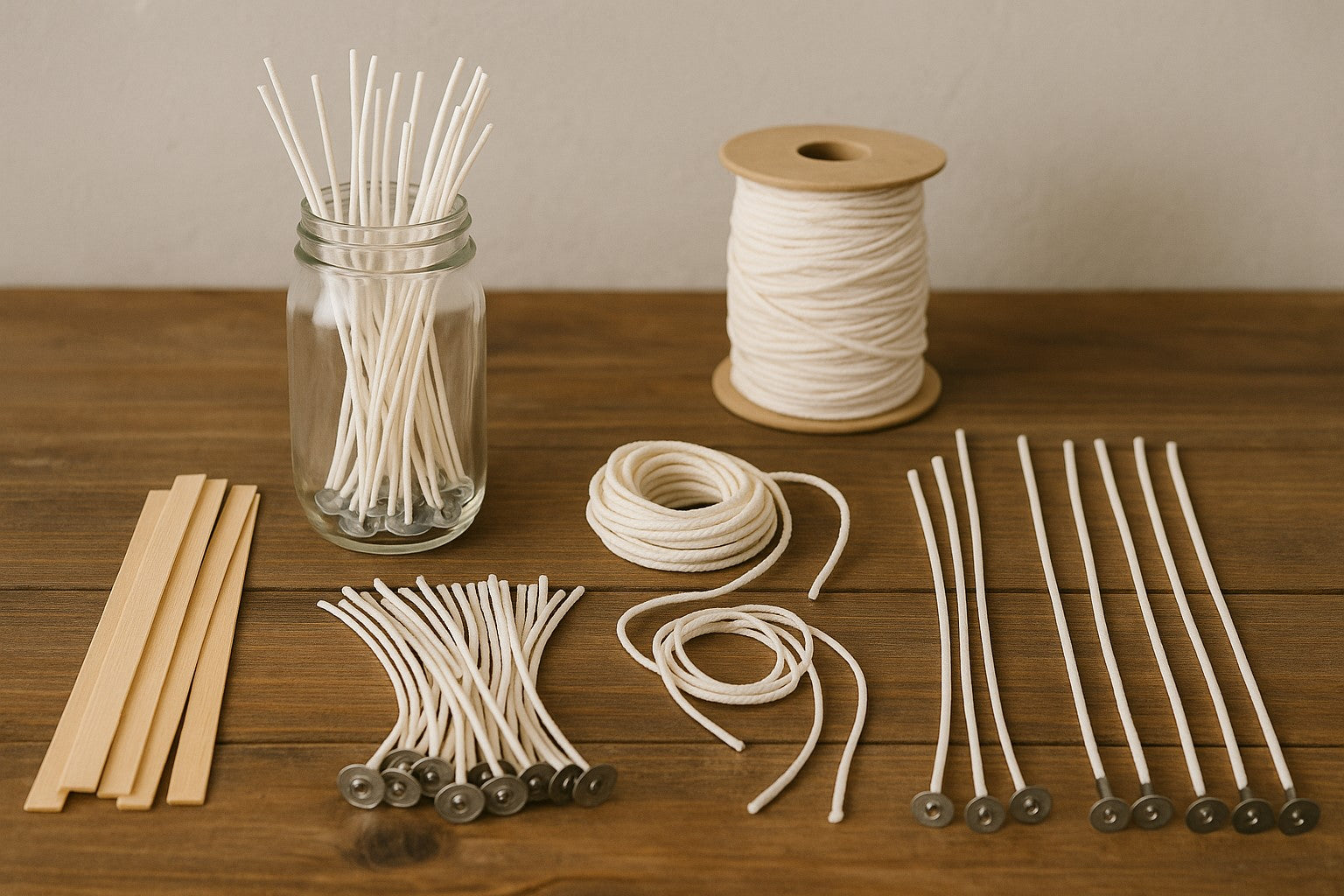
Get the wick size right and most flame problems solve themselves before they start. Start with the wick size chart to match your wax and vessel, grab a proper wick trimmer so that ¼ inch cut is easy every time, and if you're testing wick sizes across a new wax or vessel, a wick sample pack is the cheapest way to find the right one without wasting a full batch.