The Best Christmas & Winter Candle Scents
Christmas candle scents come down to three families, and the best holiday lineup pulls from all three: evergreen and fresh, spiced and bakery-sweet, cozy and dessert-adjacent. Skip one and the shelf feels thin. Nail all three and a customer walks in convinced it's Christmas Eve regardless of what the calendar says.
Most retail roundups stop at “here's what smells nice.” That's not enough for anyone actually pouring candles to sell. This guide names the scents, links the fragrance oils behind each one, and covers how to layer them, cure them, and get them on shelves before the season closes.
Evergreen & Fresh Scents
Evergreen is the backbone of any winter candle scents lineup. It's the note that makes a room smell like a tree just got carried through the front door, with snow still melting off the branches.
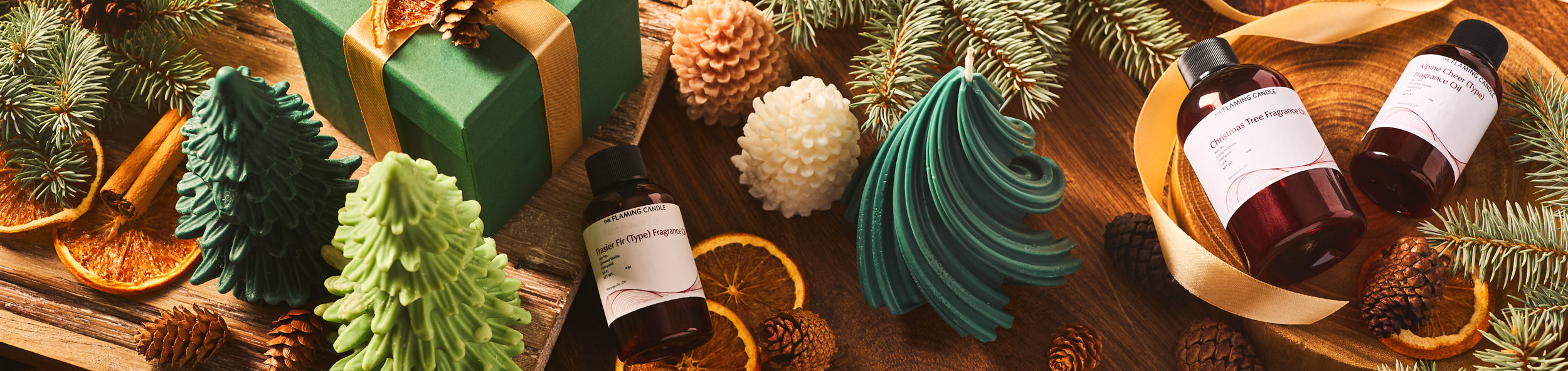
Balsam Fir Fragrance Oil leads with dominant pine over a base of light cedar and warm musk. Straightforward, strong on cold throw, and it reads as “Christmas tree” to nearly anyone who smells it blind. Frasier Fir (Type) Fragrance Oil sits a shade crisper and greener, built for makers who want the fir note without any sweetness sneaking in underneath. For something more layered, Woodland Foliage Fragrance Oil pushes into frosted-woods territory: pine and fir still lead, but the trail runs rounder and mossier, more forest floor than ornament.
Evergreen also does double duty as a base note. Pour it alone for a clean winter scent, or use it as the woodsy foundation under a spice blend for something closer to a full Christmas-tree-and-hearth scene.
Spiced & Bakery Scents
Spice is where holiday candles earn their bakery-shop credibility. Cinnamon Stick Fragrance Oil is the straight answer: ground cinnamon and warm clove with the faintest orange note underneath, a scent that reads instantly and needs zero explanation on a label. Gingerbread Fragrance Oil layers ginger, cinnamon, and nutmeg over sugar and vanilla, built for anyone chasing the fresh-from-the-oven cookie effect. Harvest Spice Fragrance Oil rounds out the group with a spiced cider profile: plum and pomegranate warmed by clove, ginger, and cinnamon, closer to mulled cider on the stove than a cookie sheet.
Blend two of these in the same room and the effect compounds fast. A gingerbread candle next to a cinnamon stick candle doesn't smell like two candles. It smells like a bakery decorated with twinkling lights and shiny ornaments.
Spice notes also perform well as a mid layer between an evergreen base and a cozy-sweet top, which is exactly why every scent family in this guide is built to work alone or stacked with the other two.
Cozy-Sweet Scents
The cozy-sweet family turns a candle from “nice” into the one customers call you about restocking. Vanilla Bean Noel (Type) Fragrance Oil pairs sugar cookie sweetness with warm vanilla, built specifically for the season rather than a year-round vanilla wearing a holiday label. Peppermint Fragrance Oil is the sharp, minty counterpoint every holiday lineup needs, crisp and clean with just enough warm vanilla underneath to keep it from reading like toothpaste. Mocha Mint Fragrance Oil bridges cocoa and peppermint directly, creamed mint over crisp cookie-wafer notes, basically the candle version of the drink everyone insists they only order in December.
Stock all three and a display case covers evergreen, spice, and dessert without a single overlap. That's not an accident. That's the point of building a lineup instead of picking favorites.
Cozy-sweet scents also work well for gifting, since a recipient doesn't need to already have a preference for woodsy or spice-forward notes to enjoy vanilla or peppermint.
Make Holiday Candles in Time
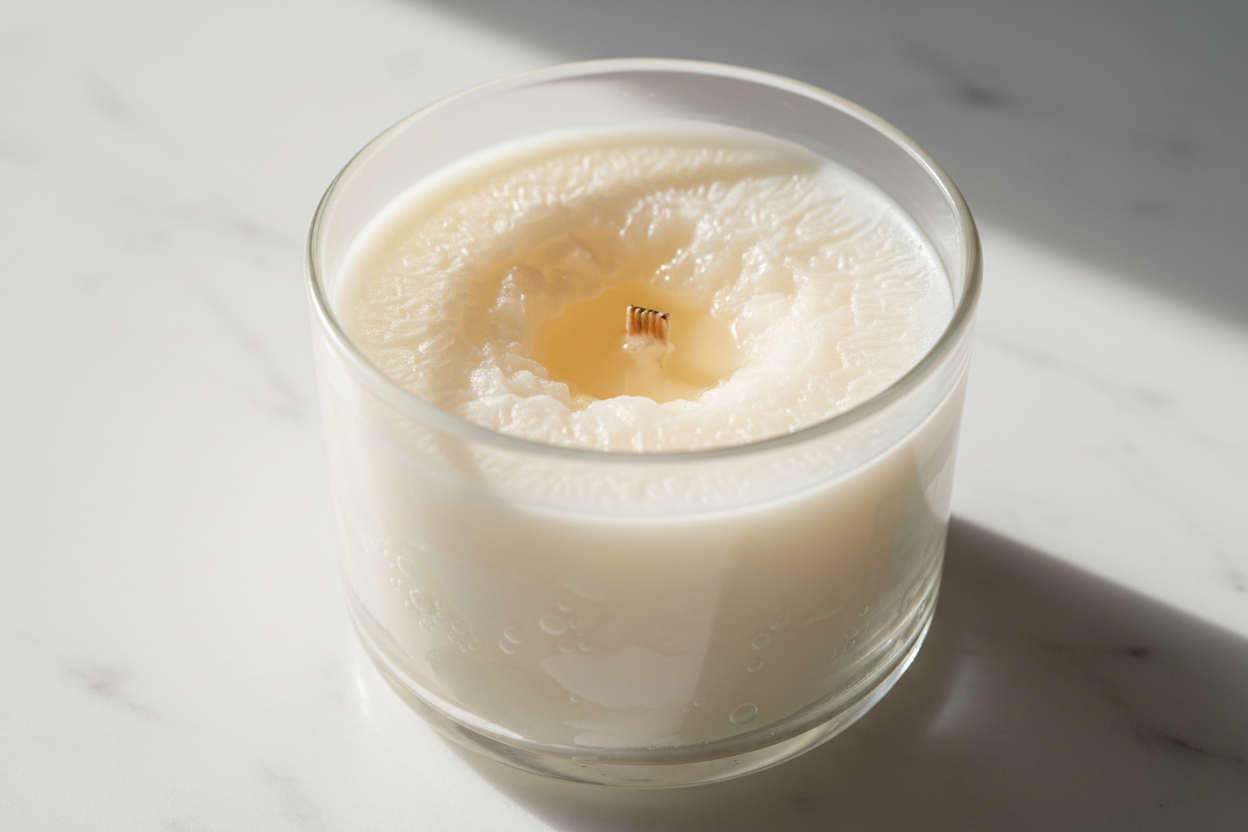
Here's the part that gets skipped every single year: cure timing. Fragrance oil needs time to fully bind to wax, and most soy and paraffin blends need one to two weeks of cure before scent throw hits its peak, according to standard fragrance load guidance. That window is driven by chemistry, not preference.
Skip the cure window and even a great blend of balsam fir and gingerbread throws thin. Thin scent throw on a holiday candle is the fastest way to lose a customer during the one season built on repeat customers. For more on getting cold and hot throw right across a full batch, our guide to scent throw covers the fundamentals in more depth.
Layering two families is the fastest way to build a seasonal line without pouring a dozen new SKUs. A fir base with a spice top note reads as “Christmas tree farm with a wood stove going.” A spice base with a cozy-sweet top reads as bakery. Keep total fragrance load within the specific oil's safe usage rate. Most fragrance oils cap out well under 10% of the wax's weight, but that ceiling shifts by formulation, so check the spec sheet or safety data sheet for each individual oil rather than assuming one number applies across the whole lineup.
Early October is for pouring balsam fir, gingerbread, and the other steady sellers that move all season. Late October is for peppermint and vanilla blends, timed to be fully cured before Black Friday demand hits. Anything poured after mid-November is racing the clock for a December 1 launch and rarely wins.
If woodsy blends are already working with a customer base, our scents for women guide make natural next builds once the holiday rush eases. Building a masculine or floral collection for the same season works the same way: pick a family, layer two or three oils, and cure long enough for the wax to actually hold what got poured into it.
New to blending altogether? Start with our beginner candle making guide before touching a holiday blend. Scent throw problems are almost always a wax and wick issue before they're a fragrance oil issue, and a holiday launch is the wrong week to find that out.
FAQ
What are the best Christmas candle scents?
Balsam fir, cinnamon, gingerbread, vanilla, peppermint, and cocoa cover the range most shoppers want. Evergreen scents anchor the woodsy end, spiced bakery notes carry the middle, and cozy-sweet blends like vanilla and peppermint close it out. A lineup built from all three families consistently outsells a single-note collection.
What scent is most popular at Christmas?
Peppermint and balsam fir consistently top our holiday sales, with gingerbread close behind. Peppermint reads as “holiday” even outside candle contexts, while balsam fir pulls in customers who want a space to smell like an actual tree rather than a dessert table. Both perform well alone or blended together.
When should I make holiday candles?
Pour holiday candles at least one to two weeks before you plan to sell or gift them, since fragrance oil needs that window to fully cure into wax. For a mid-November launch, start pouring in early October. Waiting until the week before Black Friday means shipping candles before scent throw peaks.
What smells like Christmas in a candle?
Balsam fir, cinnamon, and gingerbread are the three notes most people associate with Christmas specifically, versus generic winter scents like plain vanilla or unscented pine. Layer an evergreen base with one spiced note and the result reads as unmistakably Christmas rather than just cold weather.
Shop the Holiday Lineup
Ready to build the shelf? Shop our full holiday fragrance oils collection, browse the broader seasonal fragrance collection for year-round rotation, and stock up on candle jars, tins & gift sets before the pour schedule gets tight. Cart after cart, every December. There's a reason.