How Can I Get A Strong Scent Throw?
Candle scent throw is what decides whether your candle fills the kitchen or just sits on the counter for decoration. When throw is weak, it is rarely one broken thing. It is usually a fragrance load that is too shy, a cure that got skipped, a wick too small to build a melt pool, or an oil that was never built to survive heat in the first place.
If you are still new to candle making, our beginner guide covers the fundamentals first. This one goes deep on throw specifically, covering fragrance load, cure, wick, and oil, so you know exactly how to make candles smell stronger instead of guessing batch to batch. The numbers below come from testing across soy and paraffin side by side, not just one wax's sweet spot.
Weak Throw vs. Strong Throw: The Variables That Matter
Same wax, same jar, same fragrance. Here is what separates a candle that fills the room from one that barely clears the coffee table.
|
Variable |
Weak Throw Setup |
Strong Throw Setup |
|
Fragrance load |
4 to 5% |
8 to 10% soy, 6 to 8% paraffin |
|
Wick size |
Undersized, tunnels down the center |
Sized to melt wax edge to edge |
|
Cure time |
Tested the day it is poured |
Cured 1 to 2 weeks |
|
Oil type |
Essential oil substitute |
Fragrance oil built for heat |
Change one thing and your throw gets better. Change everything and suddenly the whole room smells like success.
Use the Right Fragrance Load
Fragrance load is the percentage of fragrance oil measured against the weight of your wax, and it is the first place to look when a candle not throwing scent has you stumped. Most waxes throw best somewhere between 6 and 10%. Soy sits on the higher end of that range, typically 8 to 10%. Paraffin performs well lower, around 6 to 8%.
Push past roughly 12% and more fragrance stops meaning more scent. Instead, oil pools on the surface, the wick struggles to stay lit through the extra saturation, and soot starts creeping up the inside of your glass.
Start testing at the top of your wax's recommended range, not the bottom. Then check the specific spec sheet for your fragrance oil and your wax, since maximum load varies by formulation, and blending past a tested limit is where soot and separation come from.
Cure Your Candles
Cure is the resting period between pouring a candle and burning it, and skipping it is the fastest way to misjudge a batch. Most candles need 1 to 2 weeks for the fragrance to fully bond with the wax. Soy asks for closer to the full 2 weeks.
Light a candle the day after you pour it and the throw will read weak, not because the fragrance load was wrong, but because the fragrance has not finished settling into the wax structure yet. A candle that seems flat on day two can throw completely differently by day fourteen.
Mark the pour date on every batch and set a reminder before you test it. It is tempting to burn a test candle the next morning just to check your work, but that first burn gives a false read every time. The wait is inconvenient. It is also part of the craft, not a step to skip past.
Wick for a Full Melt Pool
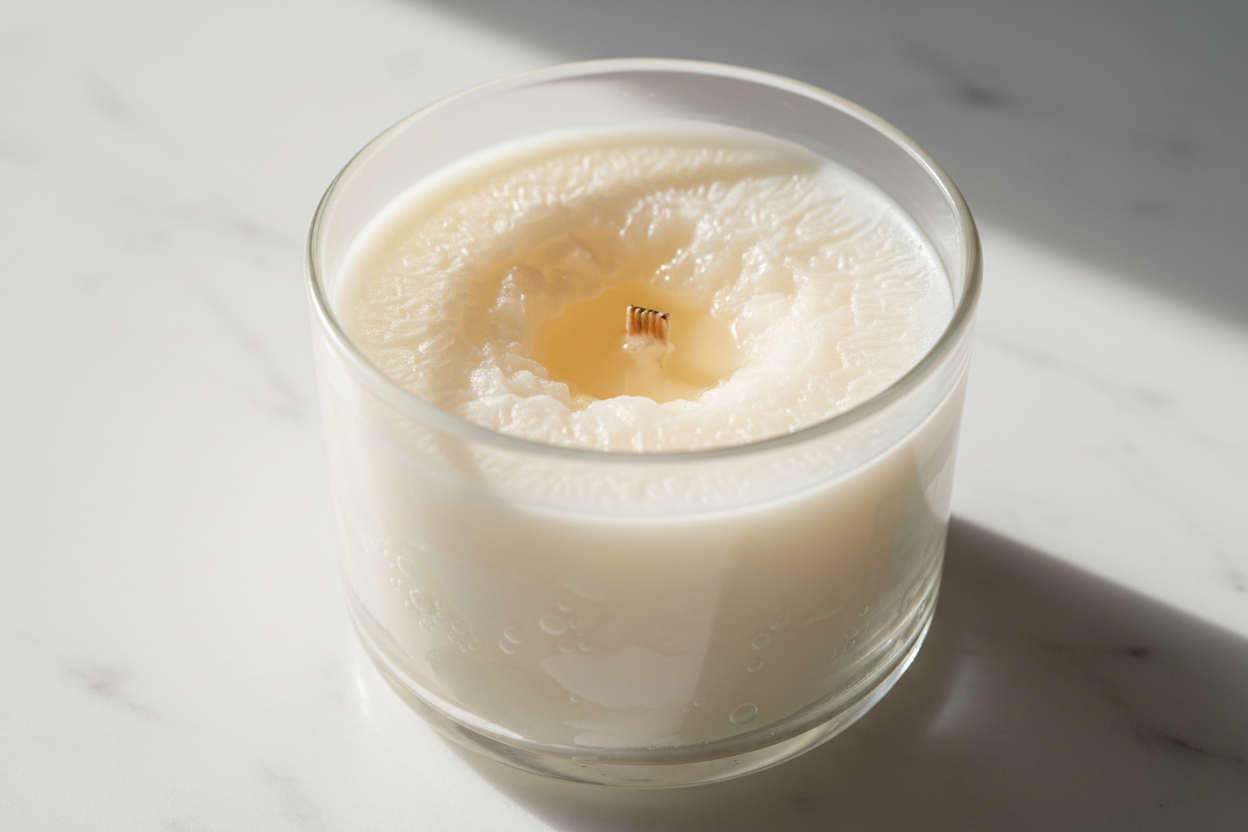
No full melt pool? Your hot throw never had a fair shot. A wick that is sized too small burns a narrow tunnel straight down the center of the candle, leaving most of the fragrance trapped in unmelted wax along the edges, where it never gets the heat it needs to release.
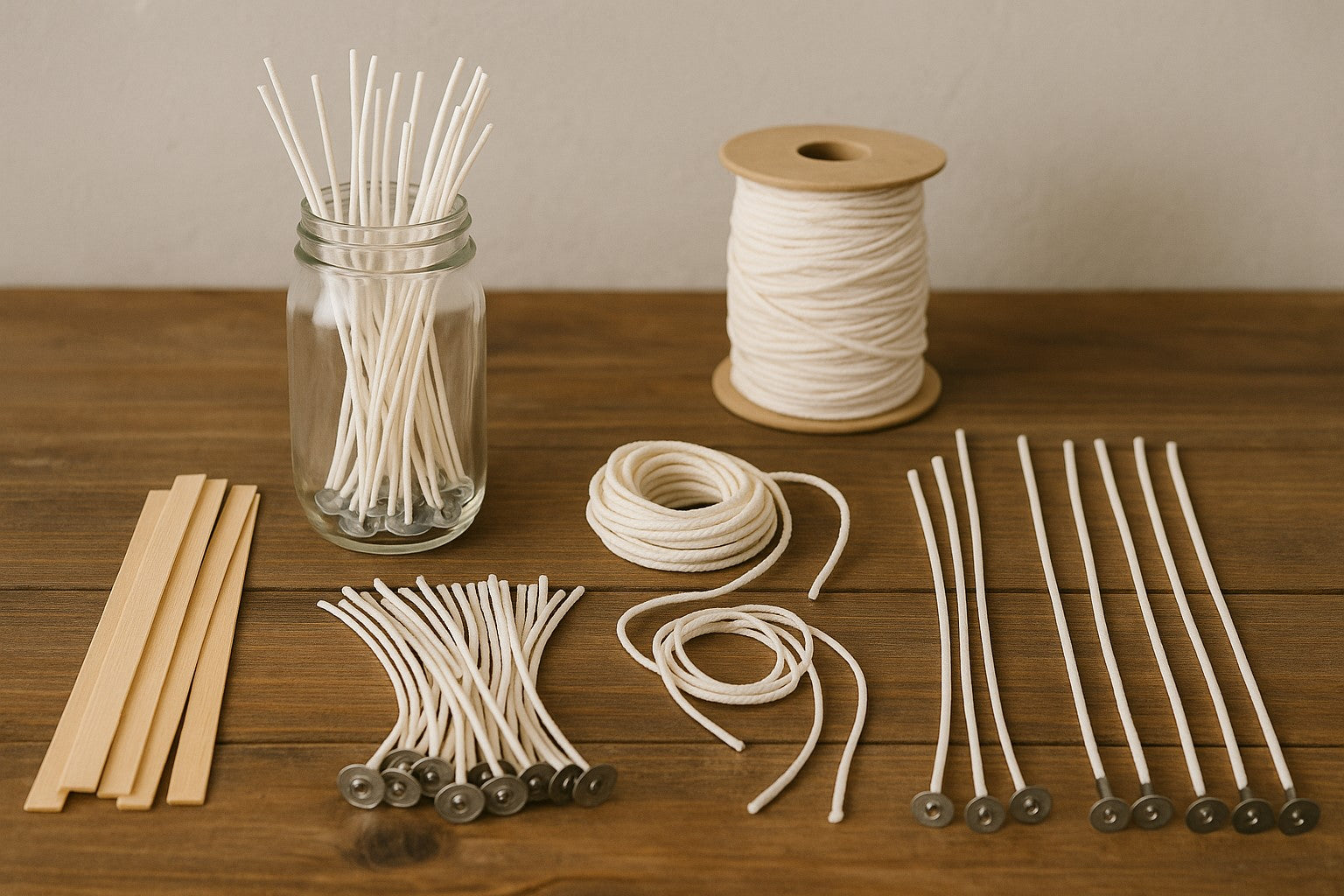
A properly sized wick should melt wax out to the edge of the vessel within the first few hours of burning, edge to edge, not just a narrow well down the middle. Our wick size chart breaks sizing down by wax type and container diameter, so you are matching wick to vessel instead of guessing.
If you have already poured a batch with a wick that is too small, trimming the wick or burning it longer will not build a melt pool that was not sized to exist in the first place. The fix lives in the next batch, with the right wick chosen before you pour.
Choose Oils Built for Throw
Not all scent comes from the same source, and this is where a lot of weak throw complaints actually start, before anyone even checks the fragrance load. Fragrance oils are engineered specifically for heat stable throw. They are formulated to hold together in a hot melt pool and keep releasing scent steadily as the candle burns down. Essential oils are natural and smell wonderful in a diffuser, but they are more volatile under heat and tend to throw weaker in candles, especially as the burn continues.
That does not make essential oils wrong. It makes them a different tool for a different job. If you are deciding between the two for a candle specifically, our breakdown on fragrance oils vs essential oils covers the tradeoffs in more detail, including why substitution is one of the most common causes of a candle underperforming its own recipe.
Once your oil choice is locked in, it helps to see what is actually resonating with customers. Our roundup of popular scents is a solid place to browse what is selling and why, especially if you are deciding what to test next.
Cold Throw vs Hot Throw
Cold throw is what you smell from an unlit candle, straight out of the jar. Hot throw is what actually fills the room once that candle is burning. They are two different measurements, and testing only one gives you a skewed read on how a candle will perform for the person burning it.
Soy wax often cold throws beautifully. Open the jar and it smells strong, sometimes stronger than the same fragrance in another wax. But that same candle can read softer once it is lit, because soy releases fragrance more gradually under heat. Paraffin tends to do the opposite: modest on the shelf, considerably stronger once burning. Neither behavior is a flaw. They are different waxes doing different jobs, and knowing which one you are working with changes how you should judge a test burn.
Our guides on soy wax and paraffin wax go deeper into how each one behaves across a full burn, not just the first sniff. If you are chasing hot throw specifically, test it lit. A jar that smells incredible closed on a shelf can still underperform once someone actually lights it.
Want to see this in your own workshop instead of taking our word for it? Pour the same fragrance oil into two wax types, or the same wax with two different wick sizes, at the same fragrance load and the same cure time. Light both side by side and compare hot throw directly instead of relying on memory or a single test candle from last month. Most makers change the wax and the wick and the cure all at once, then wonder which change actually helped. Isolate one variable, keep everything else identical, and the results tell you exactly what to fix next time.
Before Your Next Pour
-
Check fragrance load against wax type: soy 8 to 10%, paraffin 6 to 8%.
-
Cure for the full 1 to 2 weeks before judging throw.
-
Match wick to vessel so the candle builds a full melt pool.
-
Choose fragrance oil over essential oil when hot throw matters.
FAQ
Why is my candle scent weak?
A weak candle scent throw is almost always a stacking problem, not one mistake. A fragrance load under 6%, an uncured candle, a wick too small for a full melt pool, or essential oil swapped in for fragrance oil can each weaken throw alone. Check load, cure, and wick first.
How much fragrance oil should I use?
Most waxes perform best with a fragrance load between 6 and 10% of the wax weight. Soy typically runs 8 to 10%, paraffin closer to 6 to 8%. Going above 12% does not boost throw. It causes oil to pool, clogs the wick, and produces soot. Check the maximum load listed on your fragrance oil and wax spec sheets.
How long should candles cure?
Most candles need 1 to 2 weeks to cure before you judge their throw, giving the fragrance time to fully bond with the wax. Soy wax benefits from closer to the full 2 weeks. Testing a candle immediately after pouring will almost always read weaker than it actually performs. Mark the pour date and wait it out before troubleshooting further.
Does soy or paraffin throw scent better?
It depends on which throw you are measuring. Soy wax tends to cold throw strongly, meaning it smells great unlit, but can read softer once burning. Paraffin usually does the reverse: quieter unlit, stronger once lit. Neither wax wins outright. Pick based on which throw matters most for how the candle will be sold or used.
Shop the Fix
Ready to test it yourself? Shop fragrance oils and candle wax built for real throw, run your numbers through the fragrance load calculator, and check the wick size chart before your next pour. A stronger candle starts with the right batch.