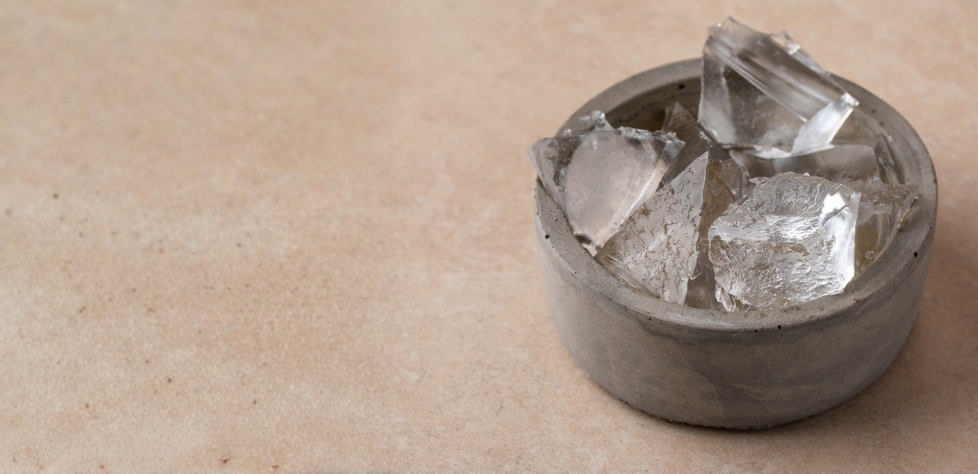
Gel Candles: How to Make Them
TL;DR
Gel candles are built from gel wax, a clear, rubbery blend of mineral oil and polymer resin that pours into heat-safe glass and stays fully see-through. Melt it low and slow, pour between 215°F and 220°F for maximum clarity, use gel-rated fragrance oils at the correct load, and set embeds before the gel firms up. See below for what gel wax is, the supplies the project needs, a bubble-free pouring method, and the fragrance and safety limits that keep a batch safe and performing beautifully.
Gel wax is what turns a candle into a work of art that looks like glass. Every craft store candle you have ever seen with a shell suspended mid-pour, or a layered look with color bands stacked like a parfait, started as gel wax. Unlike paraffin wax or soy, gel stays fully transparent from pour to cure, which is the entire reason it exists: to show off embeds, layers, and color instead of hiding them inside an opaque block. If you already have some candle making basics under your belt, gel is a different animal, and this guide treats it that way. Keep reading below for what gel wax actually is, every supply the project needs, how to pour it clear, and the fragrance and safety limits that keep a batch from turning into a cloudy, weeping mess.
What Gel Wax Is
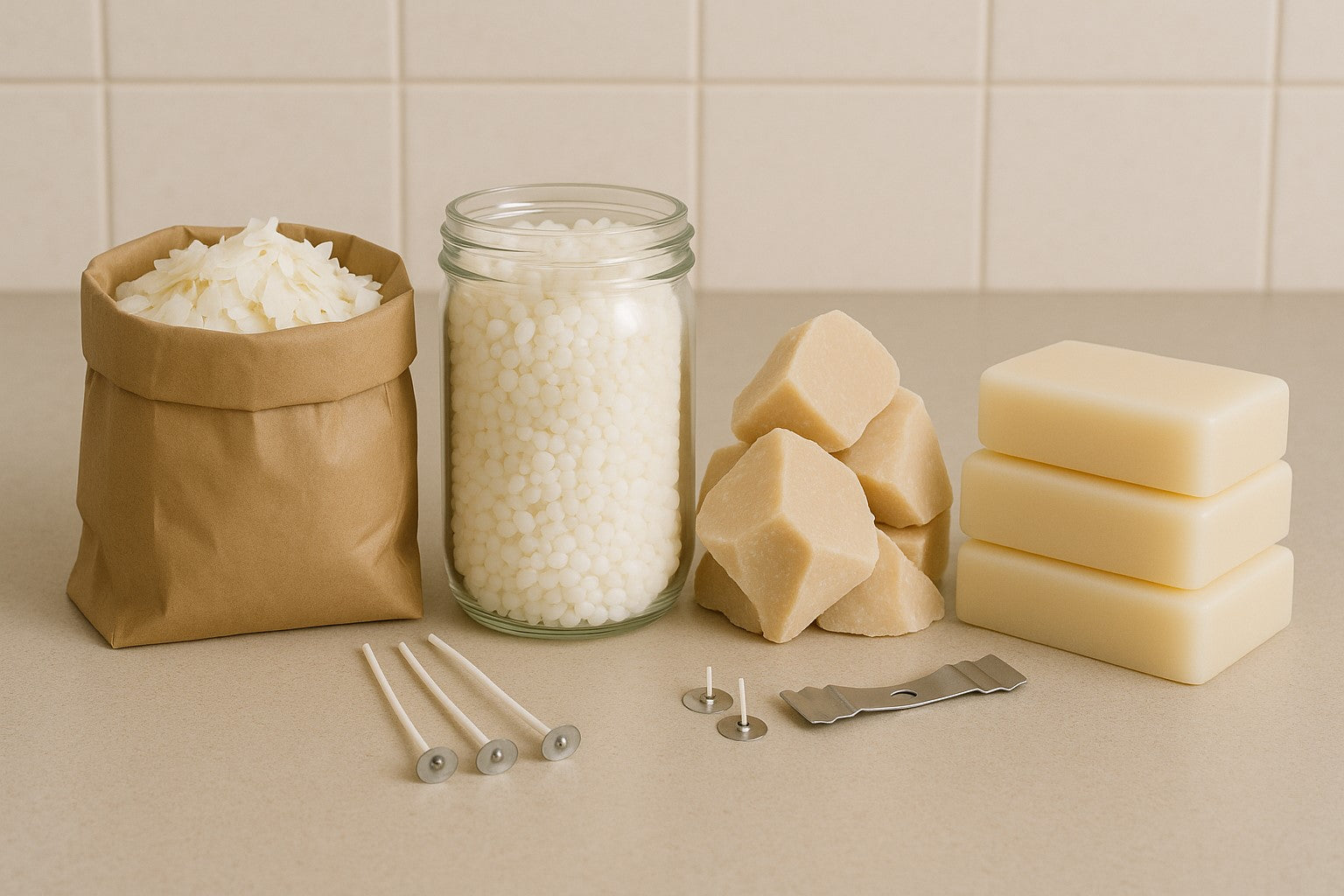
Gel comes in three density grades: low (LP), medium (MP), and high (HP). LP is the loosest pour, holds the least fragrance, and works best for plain, clear candles with no suspended weight. MP is the grade most makers reach for first, because it balances a workable fragrance load with a firm enough set to hold light and medium embeds in place. HP is dense enough to suspend heavier inserts, shells, stones, mineral chips, without them sinking to the bottom of the glass before the gel sets.
Density is not a style preference. It controls exactly how much fragrance the gel can carry and how well it holds an embed where you put it. Grab a grade lighter than the project calls for and embeds drift or sink. Grab one heavier than it needs and you will fight air bubbles through the entire pour. We take clarity personally, and density grade is where that fight actually gets won or lost.
What You Need
Gel wax in the density grade the project calls for.
Gel-safe fragrance oil, non-polar and rated with a flash point of 170°F or higher. Standard fragrance oils built for paraffin or soy will cloud or curdle gel wax on contact, so this is not an ingredient to substitute casually.
Heat-safe glass vessels rated for direct, sustained heat, never plastic and never a container that is merely candle-adjacent.
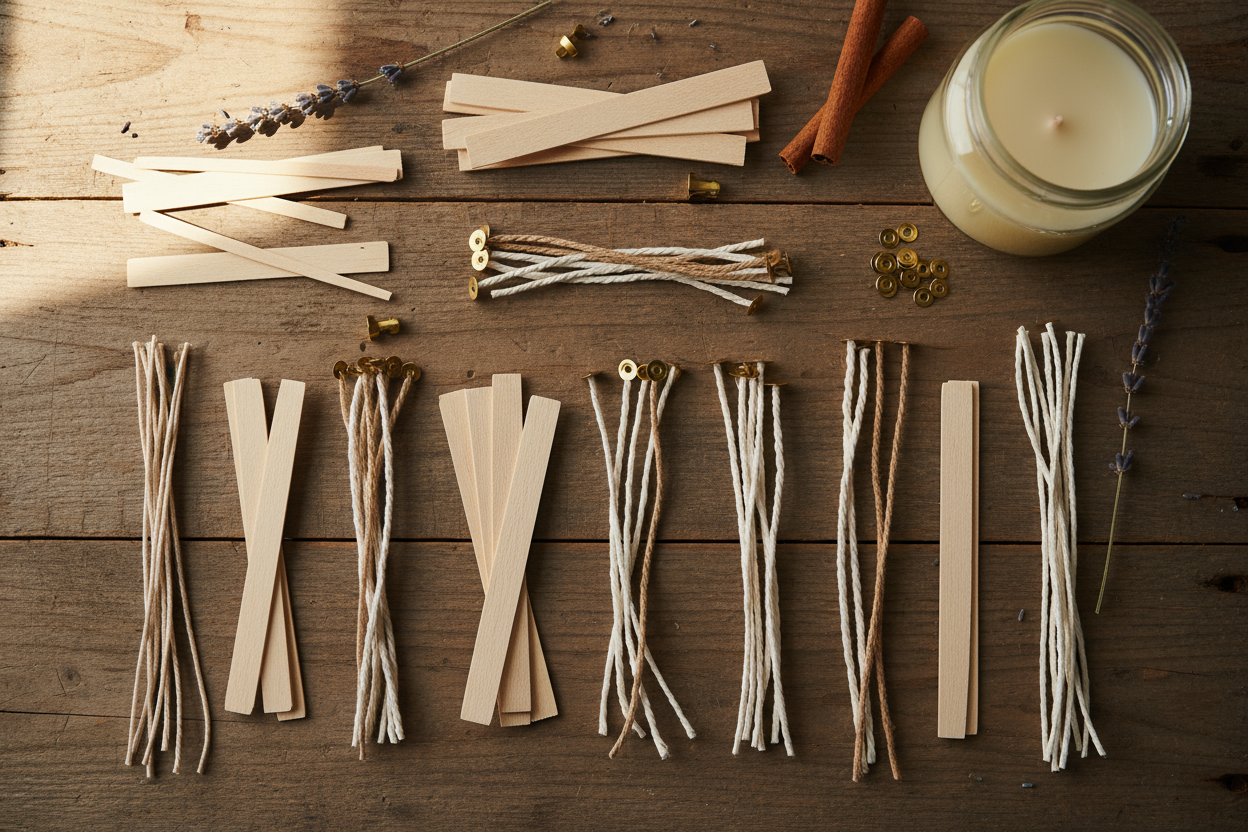
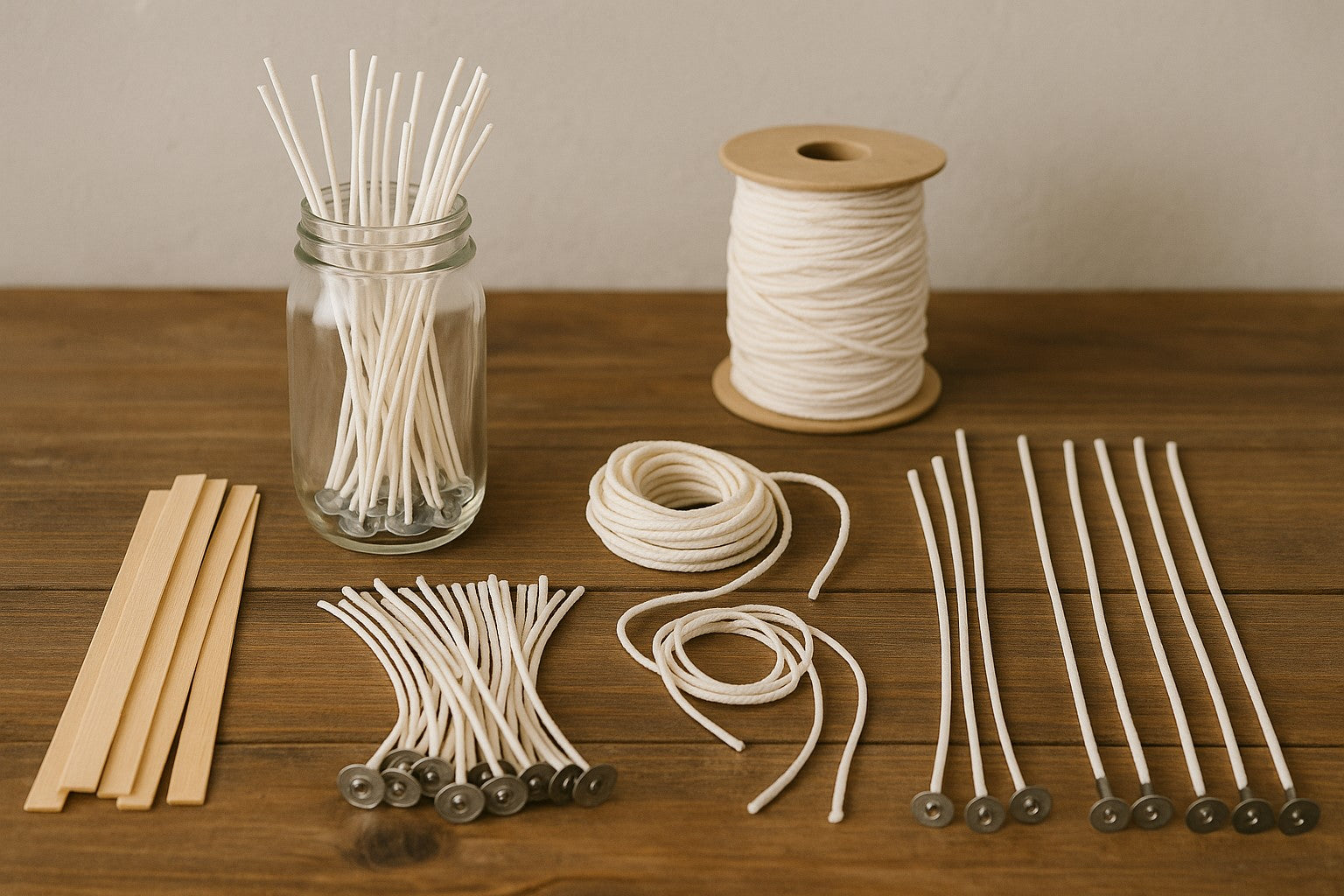
Zinc-core wicks. The metal core keeps the wick standing straight through gel's looser, more fluid pour, instead of leaning into the glass wall the way a plain cotton wick tends to in a thinner medium.
Embeds: shells, mineral chips, dried botanicals rated safe for wax, or other non-flammable inserts built for suspension in a clear pour.
A double boiler or dedicated wax melter, a candy or wax thermometer, and a heat-safe pouring pitcher with a spout narrow enough to control a slow pour.
Not every project needs a wick at all. If you want to skip that step entirely, wickless candles use the same melt-and-pour logic without one, and gel wax works there too.
How to Make a Gel Candle, Step by Step
-
Melt the gel wax slowly in a double boiler, never over direct heat. Gel scorches faster than paraffin, and scorched gel yellows in a way you cannot pour around later.
-
Bring it to pouring temperature: 215°F to 220°F is the range for maximum clarity. Pour any cooler and the gel sets cloudy and thick, with trapped air locked in permanently. Confirm the exact range against your specific wax's spec sheet, since formulations vary slightly between suppliers.
-
Set the wick first, centered and secured to the base of the heat-safe vessel, before a single drop of gel goes in. Adjusting a wick after pouring is not an option once the gel starts to set.
-
Add gel-safe fragrance oil once the gel is off heat and just below pour temperature, measured to the load percentage your density grade allows. Stir gently. Hard stirring is what puts bubbles into a pour that is supposed to look like glass, not soda.
-
Pour slowly down the inside wall of the glass, never straight down the center. A fast, centered pour is the single most common cause of the bubble field that ruins an otherwise clear candle.
-
Place embeds as you go for a layered look, or drop them in immediately after pouring while the gel is still fluid enough to let them settle into position without floating to the surface.
-
Let the candle cure undisturbed for at least 24 hours before moving it, trimming the wick, or burning it. Gel looks set well before it actually is.
Safety & Fragrance Limits
Gel wax is mineral-oil-based, and that single fact drives almost every safety rule that follows. Fragrance load has to match the density grade: LP gel holds roughly 0% to 3%, MP handles 3% to 5%, and HP can take up to 6%. Treat those as a starting range, not a fixed number, and confirm the ceiling against your specific wax's spec sheet before scaling up a batch. Overloading gel with fragrance is what causes weeping, permanent cloudiness, or an oil that separates and pools on the surface instead of staying suspended through the gel.
Use only fragrance oils built for gel: non-polar formulas with a flash point of 170°F or higher.
Glass matters as much as fragrance does. Gel holds and transfers heat differently than solid wax, so the vessel needs to be rated for direct, sustained heat, not just labeled candle safe.
Gel wax is also treated as a liquid or gel for air travel screening, the same category as lotion or shampoo, because of its mineral-oil base. Read gel candles on a plane before packing or shipping finished candles anywhere air travel is involved.
FAQ
What is gel wax made of?
Gel wax is mineral oil combined with a polymer resin that keeps the oil from separating out over time. That resin also gives gel its rubbery, flexible texture, instead of the brittle set typical of paraffin. It comes in low, medium, and high density grades, each holding a different fragrance load and a different weight of suspended embed.
How do you make a gel candle clear?
Pour between 215°F and 220°F, hot enough to release trapped air but not so hot it scorches the gel. Pour slowly along the inside wall of the glass rather than straight down the center, and stir fragrance in gently instead of briskly. Aggressive mixing or a too-cool pour are the two most common causes of a cloudy set.
What fragrance can you use in gel candles?
Use gel-rated, non-polar fragrance oil with a flash point of 170°F or higher, dosed within your wax grade's limit: roughly 0% to 3% for LP, 3% to 5% for MP, and up to 6% for HP. Standard fragrance oils made for paraffin or soy will cloud or curdle gel wax on contact instead of blending clear.
Are gel candles safe?
Yes, when made with gel-rated fragrance at the correct load and poured into heat-safe glass rated for direct heat. Beyond that, treat gel like any open flame: trim the wick, burn on a stable surface, and never leave it unattended.
Ready to Pour
Shop gel wax, gel-safe fragrance oils, and heat-safe glass vessels, then round the batch out with zinc-core wicks and embeds. Or start with our candle making guide if the basics still need locking down first.