Why Do Candle Wicks Mushroom (and How to Prevent It)
A candle wick mushroom is carbon buildup that forms when the wick pulls in more wax than it can burn clean, usually because the wick is oversized for the candle or the fragrance load runs heavy. To keep the cap from forming, size the wick down, and trim it to a quarter inch before every burn.
What Causes Wick Mushrooming
Mushrooming is frustrating, but it rarely comes out of nowhere. Nearly every case traces back to one of three causes, and each one points to a different fix.
An oversized wick. Go even one size too big for the vessel or the wax and the wick floods itself. The flame can’t keep up with the wax being drawn in, so the excess turns to carbon rather than burning off. Before you blame the fragrance, check your candle against a wick size chart.
A heavy fragrance or dye load. Once you push past the wax’s recommended maximum, often around 10 percent fragrance by weight, the wick pulls up more fuel than the flame can burn, and carbon collects on the tip. Here, fragrance load & throw start to work against each other: chase a stronger throw with more oil, and the wick pays for it.
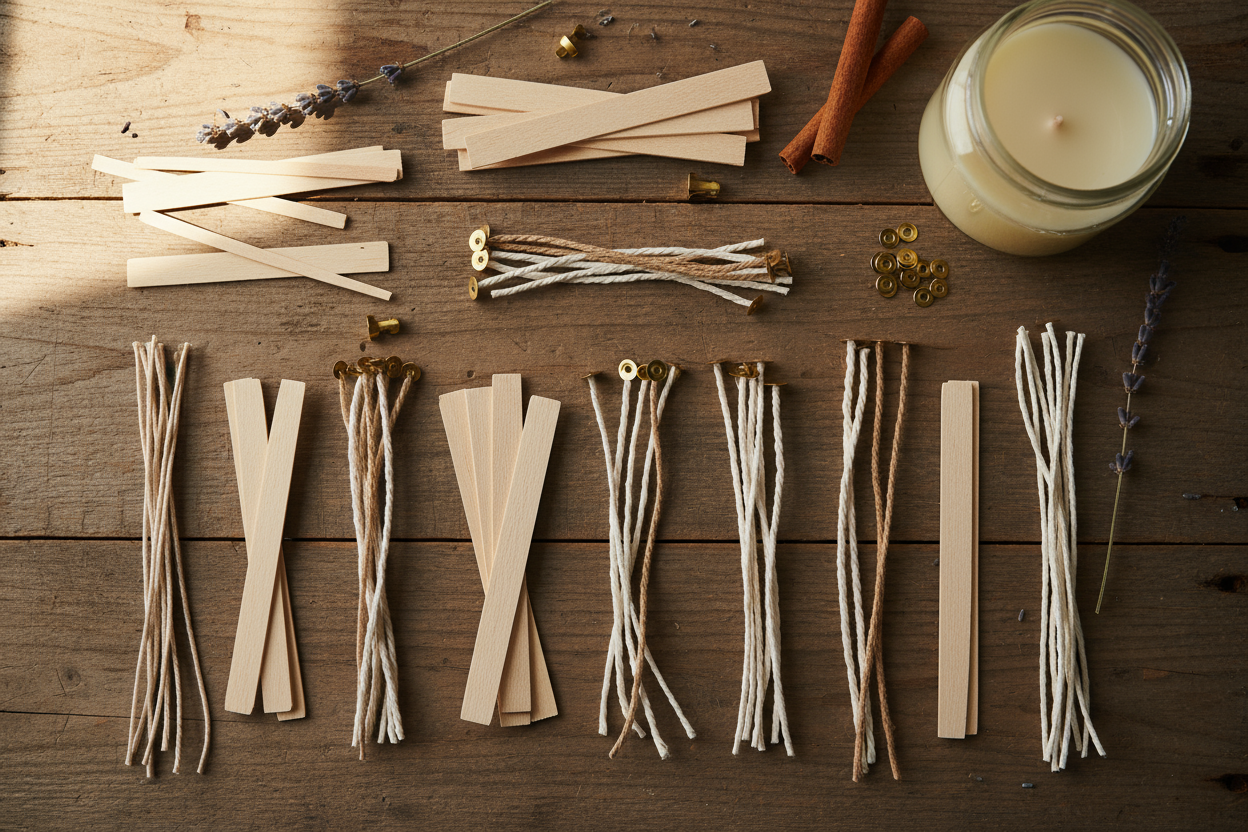
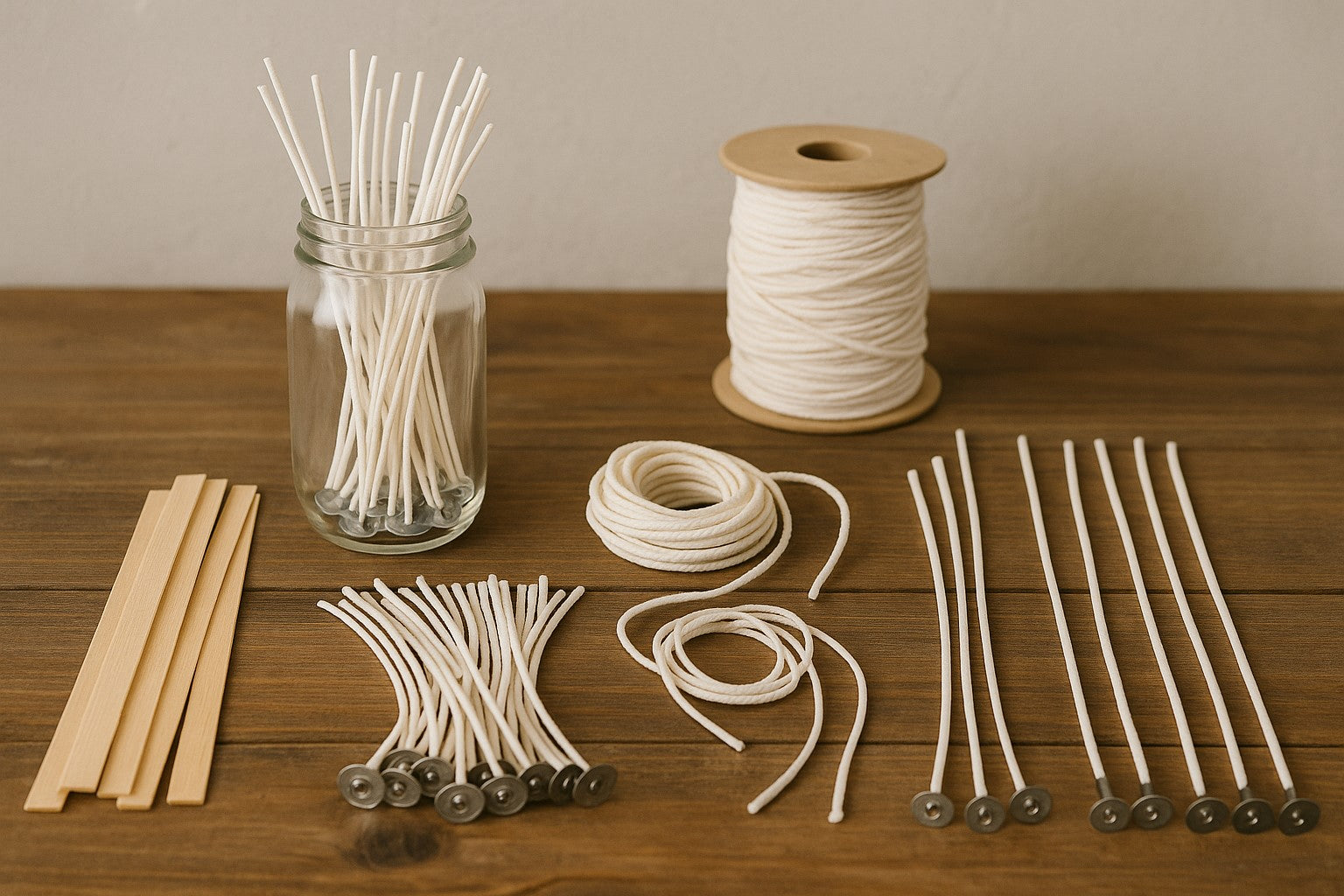
Wick type. Cored and flat braid cotton wicks behave differently at the same diameter, so a fix that works for one series won’t necessarily carry over to the next. Wood wicks are a separate case. Their flame front runs wider and flatter than cotton’s, which changes how much wax each burn draws.
These causes also stack. A wick that burns clean in a soy blend at a light load can start to mushroom once that same wax carries a heavier scent, because it’s now drawing more wax per hour than it was tested for. Switch to a paraffin or coconut blend at the same wick size and the burn rate shifts again, since every wax melts and draws at its own pace. Any change to the recipe means a fresh burn test.
How to Fix and Prevent It
Work through these in order since most mushrooming clears at step one or two.
- Trim to a quarter inch before every burn. A long, untrimmed wick behaves like an oversized one, even when the label size is correct. Trim cold, not while the wax is still warm, and pull the trimmed piece out of the wax pool before relighting.
- Size down one step within the same wick series. An ECO 10 instead of an ECO 12, for example. Retest a full burn before judging the result. Cutting two or three sizes at once can cause a weak melt pool and a drowned wick that struggles to stay lit.
- Pull back the fragrance or dye load. If you are already at the wick's tested limit, a heavy load will mushroom a correctly sized wick just as fast as an oversized one. Bring the load down toward the wax's recommended range before you touch the wick size again to ensure the candle will burn correctly.
- Retest before changing anything else. One variable at a time. Change the wick and the load in the same batch and you will not know which fix worked, which means you cannot repeat it on the next pour.
Is Wick Mushrooming Bad?
Some wick types, wood wicks especially, form a small cap by design, and it doesn’t mean anything is wrong. The cap on a wood wick tends to be flatter and lighter than the dense, carbon ball that signals a genuine sizing problem.
The real red flags are soot, a flame too high, or a cap that keeps growing burn after burn. That is not a design quirk. That’s a wick asking for a trim, a resize, or a lighter fragrance load, in that order.
A wick that burns clean all the way to the bottom of the jar is the whole point of a good candle, and we will test six versions of the same wax to get there before we call a fix done.
FAQ
What causes a candle wick to mushroom?
A wick mushroom is carbon buildup that forms when the wick draws in more wax, fragrance oil, or dye, than it can burn cleanly. It is usually an oversized wick for the vessel or wax, or a fragrance and dye load heavier than the wick was tested for. Wick type plays a role too.
How do I stop my wick from mushrooming?
Trim the wick to a quarter inch before every burn. That alone fixes most cases. If the cap keeps forming, size the wick down one step within the same series and retest a full burn. Moderate a heavy fragrance or dye load too, since it can overload a correctly sized wick.
Is wick mushrooming bad?
Not always. Some wicks form a small cap by design without affecting the burn. It becomes a problem when it comes with soot, a flame taller than about an inch, or a cap that grows with every burn. Those signs point to an oversized wick, not a normal quirk.
Does fragrance load cause mushrooming?
Yes, when it pushes past the wax's recommended maximum, often around 10 percent fragrance by weight. Fragrance oil and dye do not combust as cleanly as wax, so a heavier load asks the wick to burn ingredients it was not sized for, which shows up as carbon buildup at the tip.
Get the Right Wick the First Time
Mushrooming is a sizing problem before it is anything else. Start with the wick size chart, match the series to your wax and fragrance load, and trim. A good pair of wick trimmers makes the quarter inch rule easy to keep, and a wick sample pack is the cheapest way to test a size down without committing a whole batch to it.
New to candle making? That guide covers the full pairing process from the ground up. If soot shows up alongside the cap, our candle soot guide walks through the overlap, since the two almost always share a cause.