Aromatherapy Candles: A Scent & Mood Guide
Aromatherapy candles pair scent with mood. Lavender and sandalwood lean relaxing, citrus and peppermint lean energizing. These are scents commonly associated with a mood, not medical claims, and this guide covers the pairings plus how to formulate them so you get the most out of your fragrance.
Aromatherapy candles work by pairing scent with mood, and the pairing matters more than most makers assume. Lavender doesn't calm a room by accident. Citrus doesn't wake one up by luck. Certain fragrances are commonly associated with certain moods, and building a candle around that pairing, at the right load and cure, is what separates a candle that smells nice from one that shifts a room. Scented and aromatherapy-style candles are also one of the fastest-growing corners of the candle market, which means more makers than ever are trying to get this pairing right.
|
Mood |
Scents to reach for |
Why it fits |
|
Relaxing |
Lavender, chamomile, sandalwood |
Soft florals and a warm wood base are commonly tied to winding down |
|
Energizing |
Citrus (bergamot, grapefruit, sweet orange), peppermint, eucalyptus |
Bright, sharp top notes that read as alert and clean |
|
Focus & comfort |
Rosemary, vanilla, cedar |
Herbal clarity balanced against a warm, grounding base |
Scents for Relaxing
Lavender is the standard-bearer. It’s floral and herbaceous with just enough sharpness that it never reads as soft or one-note. Chamomile leans sweeter and rounder, often blended with lavender or vanilla to take the edge off a bedroom or bath blend. Sandalwood brings the warmth: a creamy, woody base note that grounds a blend and lingers well after the flame's out. All three are commonly associated with unwinding at the end of a day, not because of any medical effect, but because the scent memory runs that deep.
None of these need to work alone. Lavender and chamomile blend cleanly since they share a soft floral backbone, while sandalwood works best layered underneath either one rather than mixed in at equal strength, since a heavy wood base can flatten a delicate floral top note instead of supporting it. Start light on the base note and build up in small increments until the two notes sit evenly and complement each other.
Scents for Energizing
Citrus is the obvious pick: bergamot, grapefruit, and sweet orange are all sharp and bright enough to wake up a kitchen or entryway. Peppermint pushes further, cool and almost electric. Eucalyptus splits the difference, medicinal and crisp, more spa than snack. These scents are commonly associated with alertness and clarity, which is why they show up in morning routines and workout spaces more often than nightstands.
Citrus and peppermint burn fast and bright, which is exactly the point, but they also fade quicker than warmer base notes since top notes are the first thing a nose stops registering. If a candle needs to hold that energizing profile for a longer burn, anchor it with a touch of eucalyptus or a light woody base rather than relying on citrus alone to carry the whole jar.
Scents for Focus & Comfort
Rosemary is herbal and sharp, a scent that earns its spot in focus blends because it reads clean and grounded instead of distracting. Vanilla runs the opposite direction: soft, warm, dessert-adjacent, the scent equivalent of a weighted blanket. Cedar sits in the middle, dry and woody, steady enough for a home office that needs to feel calm without going sleepy. Pair rosemary with a citrus top note for a desk candle, or vanilla with sandalwood for something closer to comfort.
This is also the category where blends earn the most credit for feeling intentional rather than generic. A rosemary-cedar combination reads like a study, not a spa, while vanilla and sandalwood together lean cozier than either scent manages solo. Small ratio shifts change the personality of the blend more than most makers expect, so a test batch before a full pour is always worth it.
Essential Oils vs Fragrance Oils for Aromatherapy
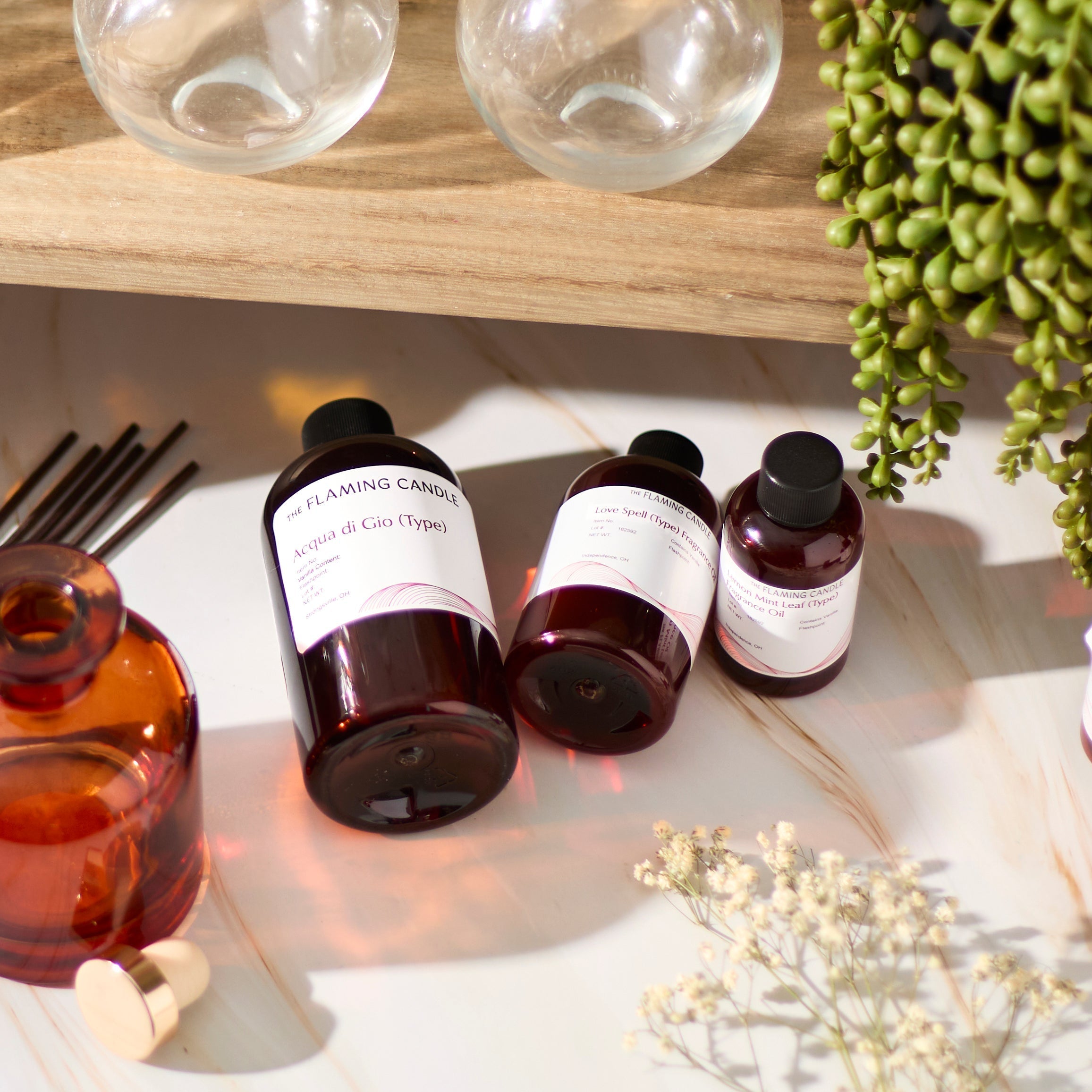
Essential oils are the purist's pick for aromatherapy, and there's a real tradeoff behind that reputation. They tend to have lower flash points, so when poured inside a burning candle they can burn off before ever filling the room, meaning weaker throw for a higher price tag. They perform best around 3 to 5 percent load in soy or beeswax. Fragrance oils, built specifically for candles, throw stronger and hold up more consistently across a full burn, and plenty are formulated to mimic essential oil profiles like lavender or eucalyptus for makers who want that throw without the flash-point ceiling.
We take scent throw personally, and a candle that goes quiet after twenty minutes doesn't get to call itself aromatherapy.
Neither option is wrong. If natural sourcing is the priority, essential oils earn their place. If room-filling scent matters more, fragrance oils get there faster and often more cost effective per pour. The honest answer depends on what the candle is for: a bedside blend meant to be subtle can run on essential oils just fine, while a living room candle meant to fill the space usually needs the extra push fragrance oils provide. For the full breakdown of where each one wins, read our guide on essential oils vs fragrance oils .
Making an Aromatherapy Candle That Actually Throws
Throw comes down to two things most recipes skip: load and cure. Load is how much fragrance goes in relative to wax, and for essential oils that ceiling sits low, around 3 to 5 percent in soy or beeswax, before the scent turns thin or the wax struggles to hold it. Fragrance oils tolerate more, often up to 10 percent depending on the wax and the supplier's spec sheet, so check that number before you pour rather than after. If you're building your first candle from scratch, our candle making guide covers the base process this all builds on.
Cure matters just as much as load. A candle needs one to two weeks resting before the fragrance fully binds to the wax, and cutting that short is the fastest way to end up with a candle that smells strong in the jar and does nothing once it's lit. Soy and beeswax hold essential oils more evenly than harder waxes, which is part of why both show up so often in aromatherapy formulations specifically. Get the load and the cure right and a modest essential oil blend can still fill a room. Skip either step, and even the priciest fragrance oil won't save the batch. For a deeper walkthrough on getting scent throw right across any wax, our guide covers it wax by wax.
A small test batch beats a full pour every time, especially with essential oils, since their behavior shifts more between suppliers and even between harvests than a standard fragrance oil's does. Pour a few sample jars at different loads within that 3 to 5 percent range, let each one cure the full two weeks, then burn them side by side. The difference between a candle that fills a bedroom and one that barely clears the nightstand usually comes down to a percentage point.
FAQ
What are the best scents for relaxation?
Lavender, chamomile, and sandalwood are the scents most commonly associated with relaxation. Lavender brings a floral, herbaceous calm, chamomile softens it further, and sandalwood adds a warm, woody base that lingers. None of these are medical treatments, but the scent memory around them runs deep enough to make them a reliable starting point for a wind-down candle.
Do aromatherapy candles really work?
Aromatherapy candles don't treat medical conditions, but scent is closely tied to memory and mood, which is why certain fragrances are commonly associated with relaxing or energizing. How much a candle “works” depends on the person and the moment, though a well-formulated candle with the right load and cure will throw enough scent to genuinely shift how a room feels.
Can you use essential oils in candles?
Yes, essential oils work in candles, though they behave differently than fragrance oils. They have lower flash points and can burn off before filling a room, so they perform best around 3 to 5 percent load in soy or beeswax. Push past that range and the wax often can't hold the extra oil, so throw decreases instead of improving.
Which is better for aromatherapy, essential oil or fragrance oil?
Essential oils suit aromatherapy candles best when natural sourcing is the priority, though they throw weaker and cost more. Fragrance oils are engineered for candles and throw stronger across a full burn. Neither is objectively better. The choice comes down to what matters more: natural origin or room-filling performance.
Shop Aromatherapy Ingredients
Every blend above starts the same way: pick your scent, pick your oil, test a batch before committing to a full pour. Shop essential oils and fragrance oils and see what actually throws in your wax.