How to Use Reed Diffusers
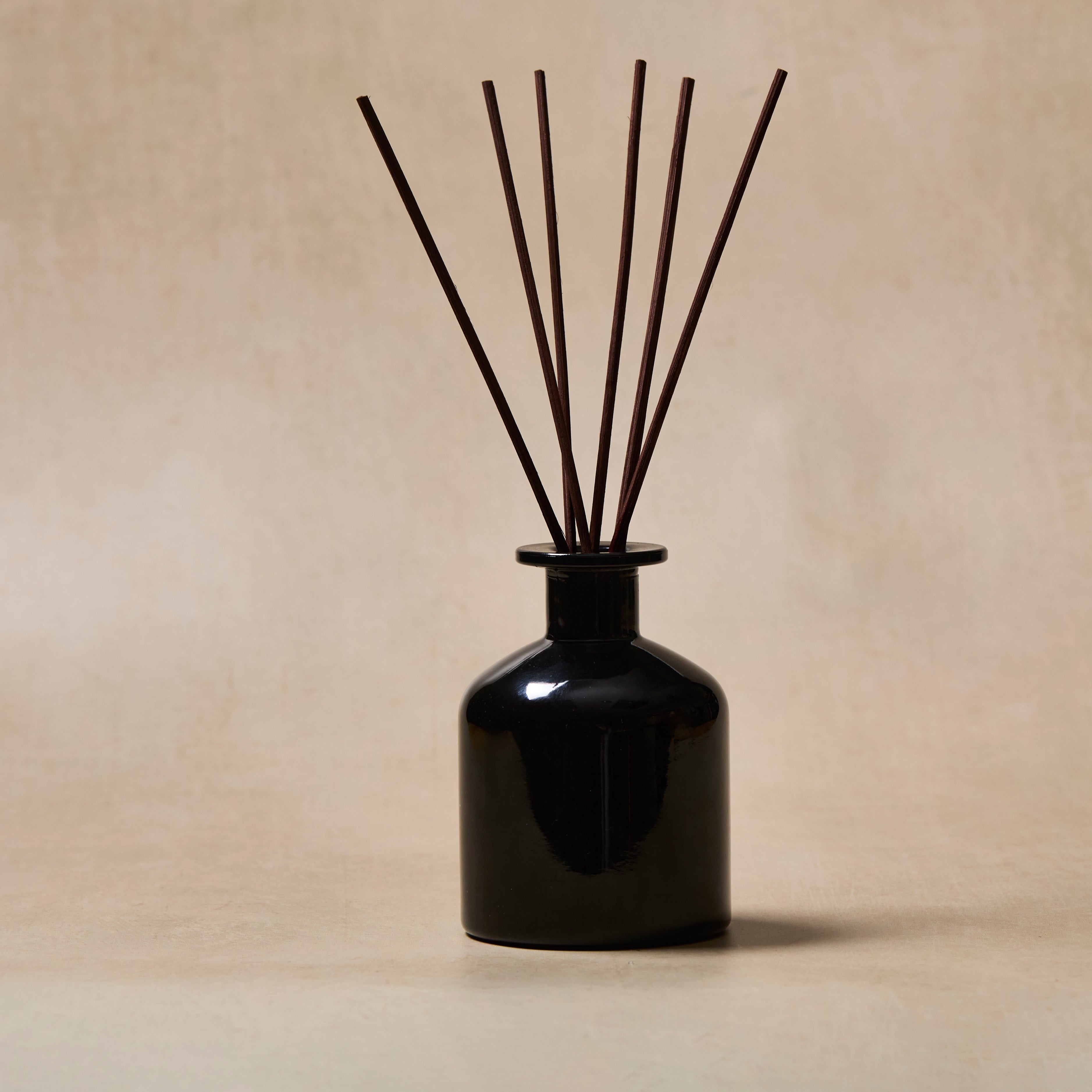
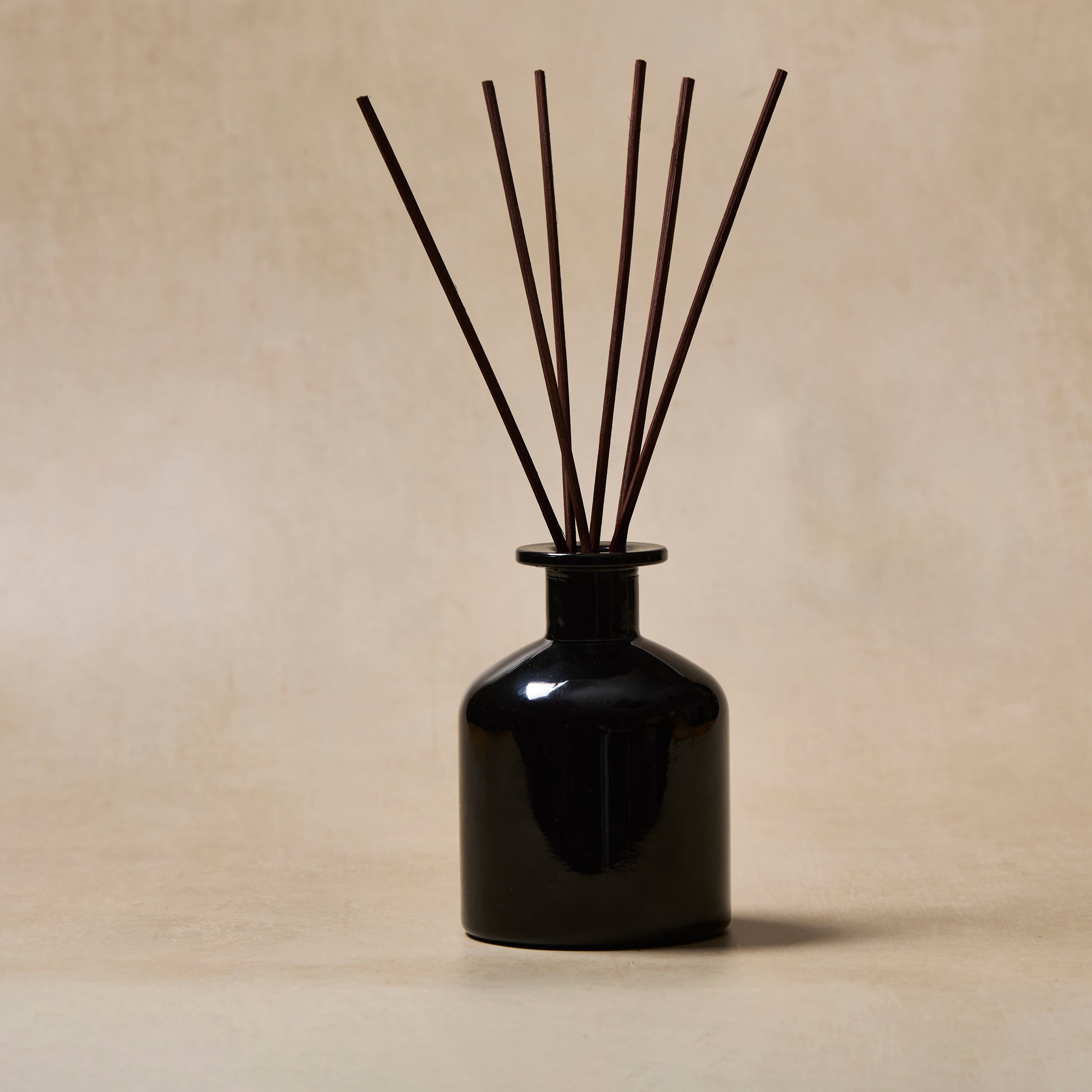
Knowing how to use reed diffusers really comes down to one mechanic: the reeds wick fragrance oil up through their fibers and release it into the air, no flame required. Flip them on a schedule and that scent holds steady instead of fading into background noise by day four.
How Reed Diffusers Work
Capillary action does the heavy lifting. Each reed is packed with narrow internal channels that pull fragrance oil upward the same way a paper towel pulls up a spill, just slower and more deliberate. Oil travels the length of the reed, reaches the exposed tip, and evaporates into the room. No wick. No flame. No heat source. Just oil moving up wood and off into the air.
That’s the whole mechanism: reeds wick fragrance oil up and release it into the air by capillary action, flame-free. It’s why reed diffusers work in bedrooms, bathrooms, and offices, anywhere an open flame isn’t the answer. Fragrance release depends on reed surface area and oil viscosity, so a properly diluted oil climbs faster and throws stronger than one overloaded with fragrance going nowhere.
How to Use and Maintain Reed Diffusers
Start with five reeds per 4 to 6 ounces of oil. That’s our baseline for a solid throw without oversaturating a mid-sized room. Fewer reeds pull less oil and throw lighter. More reeds pull more and throw stronger. Adjust up or down from five depending on room size, then commit to that count.
Flip the reeds every 3 to 5 days. Flipping puts the saturated end into open air and draws fresh oil back up the channel, so throw stays consistent instead of dropping off after week one. Warmer rooms with more airflow can run closer to every 3 days. Cooler, still rooms can stretch to 5.
Replace the reeds themselves every 4 to 6 weeks. Reeds accumulate dust and oil residue as they work, and that residue eventually clogs the same channels doing the wicking. Once flipping stops reviving the scent, that’s your cue.
Placement decides more than people expect. A diffuser set on airflow, near a doorway, a vent, a hallway, throws harder than one boxed into a closed corner. We take that as seriously as we take strong scent throw in a candle: a diffuser only performs as well as the air moving around it. Keep the bottle out of direct sunlight and away from heat vents. Both speed up evaporation, which burns through the oil faster and shortens how long the reeds actually last. Keep diffusers out of reach of pets and small children too, since fragrance oil isn’t meant to be ingested. Refill the bottle when it runs dry, typically every 4 to 6 weeks depending on reed count and room size.
How to Make Your Own Diffuser Oil
Blending your own diffuser oil comes down to one ratio: 15% fragrance oil to 85% diffuser base . For a 4-ounce bottle, that’s roughly 0.6 ounces of fragrance oil topped off with base. Our diffuser base is built for exactly this job, alcohol-free, DPG-free, and formulated to climb the reeds fast instead of pooling at the bottom.
-
Mix the fragrance oil into the diffuser base at a 15% to 85% ratio.
-
Pour the blend into your bottle, leaving room for the reeds.
-
Set the reeds and flip the first time after 24 hours to prime them.
Skipping the base and pouring straight fragrance oil is tempting, but oil that’s too viscous won’t wick, it just sits at the tip going nowhere. The base is what carries it up.
Choosing the right oil matters as much as the ratio. If you’re deciding between fragrance oil and essential oil for this project, our fragrance oils vs essential oils breakdown covers why fragrance oil throws stronger and holds up longer in a diffuser base. Once you’ve picked one, shop fragrance oils built for this kind of throw.
Reed Diffusers vs Candles vs Sprays
Reed diffusers, candles, and sprays all deliver scent, but they solve different problems. Diffusers run continuously, unattended, which makes them the pick for spaces where an open flame is off the table like offices and bathrooms. Candles bring warmth and live flame alongside scent, better suited to rooms where someone’s there to enjoy the burn. A room & linen spray delivers instant, temporary scent with zero setup, ideal for a fast refresh before guests show up rather than all-day coverage.
None of the three replaces the others. Layer a diffuser for baseline scent, a candle for evenings, and a spray for the quick fix before company arrives. A diffuser needs no attention once it’s placed, a candle needs a lit wick and someone nearby, and a spray needs reapplying every few hours. Pick based on how much attention the room is actually getting, not just which scent you like best. Our scents & aromatherapy guide gets into which fragrance families earn their spot in each format.
FAQ
How do reed diffusers work?
Reed diffusers work through capillary action. The reeds pull fragrance oil up through narrow internal channels the same way a paper towel absorbs liquid, then release it as it evaporates off the exposed tip. No flame or heat needed, just oil moving upward through wood and releasing steadily once it reaches the surface.
How often should you flip reed diffuser sticks?
Flip reed diffuser sticks every 3 to 5 days. Flipping exposes the saturated end to open air and pulls fresh oil back up the reed, keeping throw consistent instead of fading. Warmer rooms with more airflow can run closer to every 3 days, while cooler, still rooms can stretch to 5 days between flips.
How long do reed diffusers last?
A standard 4 to 6 ounce diffuser lasts roughly 4 to 6 weeks with regular flipping, depending on room size, airflow, and reed count. The reeds themselves should be replaced on that same 4 to 6 week timeline, once flipping stops reviving the scent and residue has clogged the wicking channels.
Can you make your own reed diffuser oil?
Yes. Blend fragrance oil into a diffuser base at a 15% fragrance to 85% base ratio, then pour into a bottle and set the reeds. A dedicated diffuser base wicks better than fragrance oil alone, since it’s formulated to climb the reeds instead of pooling. Adjust the fragrance percentage slightly for a lighter or stronger throw.
Shop Reed Diffuser Supplies
Ready to build a diffuser that performs? Shop reed diffuser reeds , diffuser base , and fragrance oils , plus diffuser bottles to pour it all into. Run a test batch first. Then commit to your ratio.